
Are you looking to lead a more eco-friendly life? Take a look at this list of inspirational books that offer inspiring ideas and practical tips to live a more sustainable life. As of this writing, all of these titles are owned by the Davenport Public Library. Descriptions are provided by the publishers.
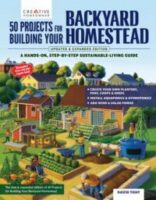
50 projects for building your backyard homestead: a hands-on, step-by-step sustainable-living guide by David Toht
Ready for new 10 new practical ideas for creating your backyard homestead? 50 Projects for Building Your Backyard Homestead: A Hands-On, Step-By-Step Sustainable-Living Guide updates one of the most popular books on the subject with the addition of 10 new projects to help your homestead thrive. Inside, experienced homesteader and contractor, David Toht, will teach you backyard homestead project ideas like accessible garden paths, insulated chicken coops, and backyard essentials from fences to feeders. Are you a beginner? Don’t worry; you’ll learn how to handle simple builds like raised gardens. Getting a little more advanced as a homesteader? Learn how to build a drought-resistant landscape or build passive ventilation systems to keep your chickens comfortable. Gardens, gates, PVC, pens, aquaponics, hydroponics, wind turbines, solar panels, roofing–it’s all here. No matter what your homestead looks like, you’ll come away from 50 Projects for Building Your Backyard Homestead, Updated Edition with encyclopedic knowledge and inspiration for what project to tackle next. This is an all-encompassing, comprehensive guide for those looking to expand their current homestead or embark on a more self-sustaining lifestyle. – Fox Chapel Publishing
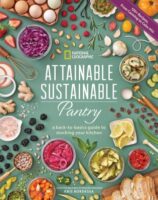
A handy illustrated collection of tried and true techniques to fill your cupboards with wholesome, homemade food—and save money, too.
Internet sensation Kris Bordessa shows how to replace storebought, processed products with your own delicious, nutritious entrees, side dishes, condiments, snacks, and more.
With more than 120 recipes—from cake mixes and marmalades to relishes, pickles, and coffee creamer—this comprehensive guide will help you ditch store-bought processed foods and fill your pantry with homemade, healthier options that will save you time and money—and taste better, too!
Inside these pages, you’ll find recipes for:
- Breakfast favorites, including homemade instant oatmeal, classic pancake and waffle mix, and make-ahead egg cups
- Baking must-haves, from chocolate cake mix to no-knead rosemary-garlic bread, sourdough bread loaves, and easy flour tortillas
- Everyday go-to condiments, such as ranch dressing, grainy mustard, teriyaki sauce, and mayonnaise
- Quick pickles, like bread-and-butter zucchini pickles, pickled beets and okra, and dill pickle relish
- Healthier snacks, including barbecue potato chips, sour “fruit” snacks, guacamole, and hummus
- And a huge collection of canning classics, from orange-vanilla marmalade and bourbon-apple jelly to chowchow, pizza sauce, salsa, and more—all reviewed for safety by the National Center for Home Food Preservation
With author and homesteader Kris Bordessa as your guide, you’ll learn how to meal prep more efficiently, reduce waste, cut out processed ingredients, and enjoy more homemade foods year-round, all from the bounty in your own cupboards. – National Geographic
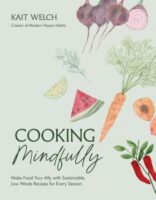
Cooking Mindfully: make food your ally with sustainable, low waste recipes for every season by Kait Welch
Fill your home with natural foods and holistic remedies that are good for your health, the planet and help you adopt a diet and lifestyle in tune with nature. Whether you have a backyard, balcony, or no outdoor space, this book shows you how to easily apply the ideals of urban homesteading to your daily cooking, so you can make whole-food meals with your harvest or grocery hauls. Kait Welch, founder of Modern Hippie Habits and an urban homesteader for nearly a decade, lays out 55+ tasty starter recipes so you can begin your urban homestead journey with success and ease.
Intuitively broken up by the seasons, each chapter has tips for shopping and harvesting for that time of the year, followed by delicious recipes to cook with your bounty. Batch cook Tomato Basil Sauce in summer, then make Tomato Powder Seasoning with the skin scraps! Highlight the flavors of fall in recipes like Roasted Garlic Rustic Loaf and Nature’s Pure Applesauce, and make your own cold fighting remedies like Sippable Fire Cider and Mullein Cough Syrup. You’ll find fresh spring recipes like Carrot Marmalade and Roasted Radish Pods, as well as hearty winter meals like Herby Potato Leek Soup and Butternut Squash Gnocchi. And with helpful guides on water bath canning and fermenting, you’ll easily stock your pantry and fridge for the long term. Get ready to adopt the holistic principles of urban homesteading and make healthy, non-processed foods for years to come. – Page Street Publishing
Creating a Modern Homestead: Traditional Skills for Real, Everyday Life by Victoria Pruett
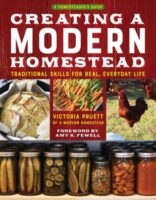
Learn how to easily bring simple living and self-sufficiency into your life, no matter where you live, in a way that works for you.
As our modern lives demand more and more from us, many people long for a slower pace of life. While picking up and moving to the country may not be an option for everyone, it is possible to embrace simple living and more traditional skills no matter where you live. Learn the lost art of from-scratch cooking, practice food security by keeping a deep pantry, find out how easy it is to raise backyard chickens, experience the joy of growing your own food (even in a small space), and preserve your own harvest through a variety of methods.
For the last ten years, Victoria Pruett of A Modern Homestead has guided her readers through the process of discovering that they truly can incorporate traditional skills into their everyday routines while they also juggle work, children, and social lives. Though the idea of including traditional skills may conjure images of spending eight hours a day in the kitchen, nothing could be further from the truth. Instead, Victoria teaches you how to deepen your skillset and understanding of self-reliance and how to easily fit simple living into your life in a way that works for you. Chapters cover:
- Cooking from scratch: 126 recipes for breads, main dishes, and desserts
- Building a robust food supply for your family
- Food preservation: water bath canning, pressure canning, freezing, dehydrating, and freeze-drying
- Best practices for backyard chickens
- Customizing your backyard garden—including traditional and Back to Eden methods—for your zone and growing season, companion planting, and natural pest control
- How to make sourdough work for you
- And more! – Lyons Press
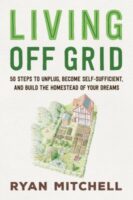
Living off grid: 50 steps to unplug, become self-sufficient, and build the homestead of your dreams by Ryan Mitchell
Ryan Mitchell never thought he would go off the grid. Yet this self-described desk-jockey with no carpentry skills today lives on 11 acres in a house he designed and powers with solar, gets his water from a well, has a composting toilet and septic system, eats from his garden, raises baby quail, and runs his own business. His bills are a fraction of what they were when he paid rent and utilities, and he has infinitely more free time to pursue the things he loves. Life is far from perfect: there are times when the generator stalls or the water pump quits. But he has independence, self-sufficiency, and the support of a like-minded community.
If you’ve ever dreamed of this lifestyle, Living Off Grid will help you navigate the most important decisions you’ll need to make to create the reality that’s right for you. Whether you’re an urbanite who just wants to save some money (and carbon) with small solar arrays or you’re ready to purchase land or you’ve already taken the plunge and want a better way to deal with your wastewater, Ryan has done the hard work to set you up for success. He will also help you steer clear of common pitfalls, including purchasing land in a flood zone, underestimating your water needs, trying to rely solely on wind power, or simply biting off more than you can chew—or afford. Finally, he will explore little-discussed topics such as living off grid when you have a “regular” job and aging in place.
As someone who has done it himself and guided countless others on their journeys to unplug, Ryan knows that going off the beaten path can be daunting. But with the right knowledge, you can choose the road less traveled – and it could make all the difference. – Island Press
Low – Maintenance Eco Gardens: A Practical Guide to Creating an Easy & Sustainable Garden that Nourishes You by Fred Meyer
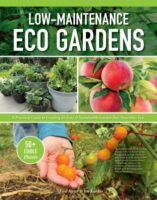
Authors Fred Meyer and Jen Kardos present a beginner-friendly guide to sustainable gardening based on permaculture principles. It teaches readers how to design self-sustaining gardens that require less effort while boosting biodiversity, natural pest control, and year-round productivity. Featuring guidance on 100 easy-to-grow plants and practical systems like mini-orchards, edible borders, and simple irrigation, the book blends ecological wisdom with mental health benefits, encouraging harmony between nature, food production, and personal well-being. – Creative Homeowner
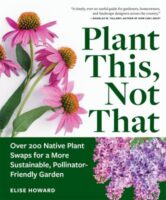
Plant This, Not That: Over 200 Native Plant Swaps for a More Sustainable, Pollinator-Friendly Garden by Elise Howard
A comprehensive guide to creating a native plant garden anywhere in the contiguous United States, with an easy-to-follow, “this, not that” format.
These days, home gardeners know that many traditional, non-native garden plants—like English ivy, barberry, and burning bush—don’t support our bees, butterflies, birds, and other creatures. And that native plants are more likely to thrive, because they evolved as part of the local ecology, so they often require less fussy maintenance and don’t depend on pesticides and fertilizers. But gardeners ready to make the switch may ask: Where do I begin? And how do I find the best native plants for my landscape?
Plant This, Not That considers some of the most common non-native (and often, invasive) plants in North American gardens and suggests substitutions for more beneficial and equally beautiful natives. Each native plant listing includes a full-color photo, along with sun, water, and soil requirements; ornamental features (including bloom time and color and whether the plant has berries, fruit, and/or fall color); and the pollinators known to depend on and support that plant. Accompanying maps show every plant’s locally native range, down to the county level. The book also features an overview of how native plants contribute to our local ecosystems, where to shop for them, advice on maintaining a mostly native garden, and resources to learn more about native planting. – Workman Publishing Company
String Quilts: Sustainable Patchwork Projects using fabric scraps by Carolyn Forster
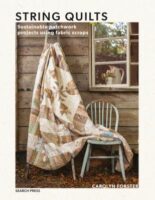
Many quilters are rediscovering a range of traditional patchwork and quilting techniques that, at their heart, are based on recycling and reusing materials. A style of patchwork that is true to this ethos, and which has been around for centuries, is string patchwork with its use of sewn fabric strips. Due to the scrap nature of string quilts, they are good for using a wide range and eclectic mix of fabrics that, otherwise, would have gathered dust in the corner of a room.
Best-selling author, teacher and quilter Carolyn Forster will show you how to:
- Transform old clothes and bedding, off-cuts and once-loved furnishing fabrics into 10 beautiful string patchwork quilts create your favorite designs with ease, using an array of scraps featuring traditional blocks
- Ensure nothing goes to waste – included here are 8 little gifts and accessories to make with the leftovers from your quilt-making including a needle case, a quilt-notions pouch, a table runner and duffel bag.
A small section on all the materials and notions to get started, plus an invaluable techniques chapter, is included.
Quilters will have everything they need to create planet-conscious quilts, and in the process celebrate old quilt and patchwork methods from quilters of yore. – Search Press
Leave a Reply