

National Nurses Day is observed annually on May 6 and marks the beginning of National Nurses Week (May 6–May 12), which concludes on the birthday of Florence Nightingale, the pioneer of modern nursing and known as “The Lady With the Lamp” for her night rounds caring for wounded soldiers during the Crimean War from 1853-1856. These celebrations honor the more than five million nurses across the United States whose compassion, resilience, and dedication form the heart of our healthcare system. First officially recognized by President Ronald Reagan after efforts by the American Nurses Association, the celebration recognizes nurses not only in hospitals but also in schools, nursing homes, clinics, and in other facilities across communities nationwide.
In 2026, the theme is highlighting #ThePowerOfNurses and encourages communities to honor the profession. The entire month of May is also set aside as National Nurses Month. Globally, International Nurses Day (IND) is celebrated each year on May 12 and is promoted by the International Council of Nurses. The 2026 theme, “Our Nurses. Our Future. Empowered Nurses Save Lives,” emphasizes the critical need to strengthen and support the nursing workforce worldwide. Together, these observances in May serve as meaningful reminders to thank nurses for the essential care they provide every day. So, in appreciation of the Nursing profession, here are some true and inspiring stories of the important work of nurses:
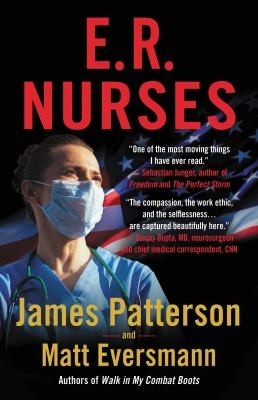
ER nurses : true stories from America’s greatest unsung heroes by James Patterson
“James Patterson and Matt Eversmann, #1 bestselling coauthors of Walk in My Combat Boots, powerfully present the medical frontline heroes who work to save our lives every day: E.R. Nurses. Around the clock, across the country, these highly skilled and compassionate men and women sacrifice and struggle for us and our families. You have never heard their true stories. Not like this. From big-city and small-town hospitals. From behind the scenes. From the heart. This book will make you laugh, make you cry, make you understand. When we’re at our worst, E.R. nurses are at their best.”
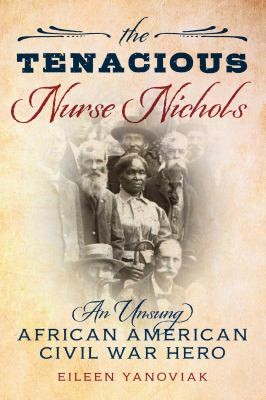
The tenacious nurse Nichols : an unsung African American civil war hero by Eileen Yanoviak
“The Tenacious Nurse Nichols is the story of Lucy Higgs Nichols, a Civil War nurse who escaped slavery in Tennessee, served among the ranks of the Union Army, finally found independence, and achieved notoriety, nobility, and self-sufficiency in a post-Civil War era that often denied black Americans and women justice and opportunity”
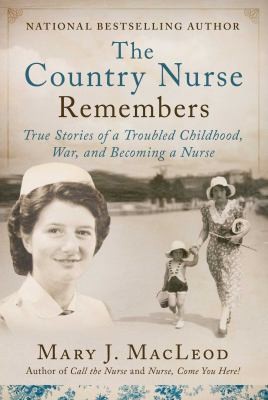
The country nurse remembers : true stories of childhood and the way ahead by Mary J. MacLeod
“From the Bestselling Author of Call the Nurse and Nurse, Come You Here!, the Moving Story of Her Young Life and Her Path to Independence through Training to Be a Nurse. Mary MacLeod’s mother died in childbirth when Mary was five, an event that marked for the child a “before time”-a lost joyful time-and after. She was shunted from one relative to another while her father coped with his grief. He married again only nine months later, perhaps to have a mother for his child, but her new mum, harsh and withholding of her love, quickly exerted complete control over her thoughts and deeds, with her father oblivious. Her name was changed to her stepmother’s choice of “Julia.” Yet the pale, thin, quiet little girl didn’t know she was unhappy: things were just the way they were. Narrating from the perspective of the child she was but with the understanding and empathy of the nurse and mother she became, the author of Call the Nurse recounts the moving, intimate, indelible story of her young life, growing up in rural England near Bath, relishing the good times when her stepmother was friendly or she helped her father in the garden, experiencing the world war-air raids and blackouts, the war effort, evacuees, German prisoners-winning a scholarship, leaving home to train for three years as a nurse, and gradually finding her way as an independent woman”.
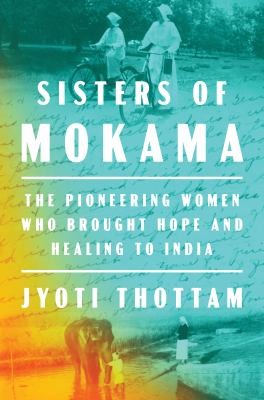
Sisters of Mokama : the pioneering women who brought hope and healing to India by Jyoti Thottam
“The never-before-told story of six intrepid Kentucky nuns, their journey to build a hospital in the poorest state in India, and the Indian nurses whose lives would never be the same. New York Times editor Jyoti Thottam’s mother was part of an extraordinary group of Indian women. Born in 1946, a time when few women dared to leave their house without the protection of a man, she left home by herself at just fifteen years old and traveled to Bihar – a poor, isolated state in northern India that had been one of the bloodiest regions of Partition – in order to train to be a nurse under the tutelage of the determined and resourceful Appalachian nuns who ran Nazareth Hospital. Like Thottam’s mother’s journey, the hospital was a radical undertaking: it was run almost entirely by women, who insisted on giving the highest possible standard of care to everyone who walked through its doors, regardless of caste or religion. Fascinated by her mother’s story, Thottam set out to discover the full story of Nazareth Hospital, which had been established in 1947 by six nuns from Kentucky. With no knowledge of Hindi, and the awareness that they would likely never see their families again, the sisters had traveled to the small village of Mokama determined to live up to the pioneer spirit of their order, founded in the rough hills of the Kentucky frontier. A year later, they opened the doors of the hospital; soon they began taking in young Indian women as nursing students, offering them an opportunity that would change their lives. One of those women, of course, was Thottam’s mother. In Sisters of Mokama, Thottam draws upon twenty years’ worth of research to tell this inspiring story for the first time. She brings to life the hopes, struggles, and accomplishments of these ordinary women-both American and Indian-who succeeded against the odds during the tumult and trauma of the years after World War II and Partition. Pain and loss were everywhere for the women of that time, but the collapse of the old orders provided the women of Nazareth Hospital with an opening-a chance to create for themselves lives that would never have been possible otherwise”.
The language of kindness : a nurse’s story by Christis Watson
“A memoir about the experiences of a nurse in London, focusing on the overlooked importance of kindness and compassion”.
The secret rescue : an untold story of American nurses and medics behind Nazi lines by Cate Lineberry
“When 26 Army nurses and medics–part of the 807th Medical Air Evacuation Transport Squadron–boarded a cargo plane for transport in November 1943, they never anticipated the crash landing in Nazi-occupied Albania that would lead to their months-long struggle for survival. A drama that captured the attention of the American public, the group and its flight crew dodged bullets and battled blinding winter storms as they climbed mountains and fought to survive, aided by courageous villagers who risked death at Nazi hands to help them”.
Leave a Reply