
If you’re looking for a cozy read, try healing fiction written by Asian authors. Many of the ones listed below follow ordinary people on journeys toward healing, growth, and self-discovery. Sometimes there’s even some magic or a cat or two! As of this writing, all of these titles are available at the Davenport Public Library. Descriptions are provided by the publishers.

The Amberglow Candy Store by Hiyoko Kurisu, translated by Matt Treyvaud
In this charming, fable-like book from Japan, a fox spirit sells magical confections to troubled humans, only for them to get a little more than they bargained for.
Welcome. We don’t get many humans here.
In a cozy night alley lies a very special store. It’s only open between the full moon and the new moon, and accessible only to yokai and those vulnerable, through a gap in the trees that leads to Gloaming Lane. It’s shelves are full of wagashi, and each candy cures an ailment of the heart or the mind. They will give you what you most desire, but not always in the way you expect.
From the young woman who craves more quality time with her boyfriend, and the man who yearns to be invisible, to the friends grappling with long-buried resentments, each customer will learn a valuable lesson, be it with the “All-Is-Revealed Chestnut Monaka” or the “Surrogate Caramels.”
But who is the mysterious proprietor behind them? And why does his shadow feature a pair of fox ears? Surely, not a tail? If he is a half-fox spirit, so be it. But why is he so stern about each candy’s “dosage”? Patience. Like the center of a gooey caramel, the best things take time to reveal themselves. – G.P. Putnam’s Sons
Best Wishes from the Full Moon Coffee Shop by Mai Mochizuki, translated by Jordan Taylor (book 2 in Full Moon Coffee Shop series)

Welcome back to the Full Moon Coffee Shop, serving up star-spun treats and magical insights for the holidays.
In Japan, cats are a symbol of good luck. As the myth goes, if you are kind to them, they’ll one day return the favor. And if you are kind to the right cat, you might just find yourself invited to a mysterious coffee shop under a Christmastime Kyoto moon.
Satomi is devoted to her job in Tokyo, but when her long-distance boyfriend hints that he is going to propose to her on Christmas Day, she feels pulled between the career that she loves and a quieter life in the country. What will the magical cats see for her future?
Satomi’s colleague Koyuki has been playing the role of the good, cheerful daughter ever since her father passed away in an accident on Christmas Day. But now that her mother has remarried, it’s hard to pretend she feels part of her new happy family. What will our feline friends reveal as her true wish this Christmas?
Junko, Satomi’s sister-in-law, lives in a small town with her husband and their young daughter, Ayu. When Junko’s estranged father becomes ill, she returns home with Ayu in tow, where she’ll learn something surprising at the enchanted coffee shop that will change her life forever.
This holiday season, each woman stands at a crossroad. With the help of some feline divinations, will they finally have the courage to seek what they most desperately wish for? – Ballantine Books
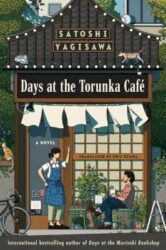
Days at the Torunka Café by Satoshi Yagisawa, translated by Eric Ozawa
Tucked away on a narrow side street in Tokyo is the Torunka Café, a neighborhood nook where the passersby are as likely to be local cats as tourists. Its regulars include Chinatsu Yukimura, a mysterious young woman who always leaves behind a napkin folded into the shape of a ballerina; Hiroyuki Numata, a middle-aged man who’s returned to the neighborhood searching for the happy life he once gave up; and Shizuku, the café owner’s teenage daughter, who is still coming to terms with her sister’s death as she falls in love for the first time.
While Café Torunka serves up a perfect cup of coffee, it provides these sundry souls with nourishment far more lasting. Satoshi Yagisawa brilliantly illuminates the periods in our lives where we feel lost—and how we find our way again. – Harper Perennial
Dinner at the Night Library by Hika Harada, translated by Philip Gabriel
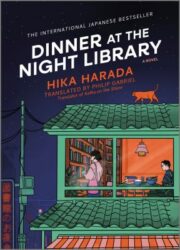
The Night Library is no ordinary library.
Within it are found the rarest and most unusual collections – the books of deceased famous writers:
the books they wrote;
the books that inspired them;
the books they loved.
All Otaha Higuchi wants to do is work with books. However, the exhausting nature of her work at a chain bookstore, combined with her paltry salary and irritating manager quickly bring reality crashing down around her. She is on the verge of quitting when she receives a message from somebody anonymous, inviting her to apply for a job at ‘”The Night Library.” The hours are from seven o’clock to midnight. The library exclusively stores books by deceased authors, and none of them can be checked out – instead, they’re put on public display to be revered and celebrated by the library’s visitors, making it akin to a book museum.
There, Otoha meets the other staff, a group of likeminded literary misfits, including a legendary chef who prepares incredible meals for the library’s employees at the end of each day. Night after night, she bonds with her colleagues over meals in the café, each of which are inspired by the literature on the shelves.
But as strange occurrences start happening around the library that may bring the threat of its closure, Otaha and her friends fear that the peace they have found there will forever be lost to them. Will their faith in the value of books strong enough to save it? And what will remain if it isn’t? – Hanover Square Press
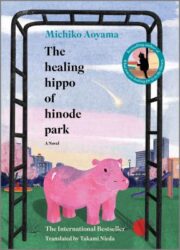
The Healing Hippo of Hinode Park by Michoko Aoyama, translated by Takami Nieda
Nestled at the bottom of a five-story apartment block in the community of Advance Hill is the children’s playground in Hinode Park. If you look to the side, standing on stubby legs, is a hippo. Its upturned eyes give it a teary look, yet for decades, its quiet power has sustained the hearts of one community. According to urban legend, if you touch the exact part of the hippo where you have an ailment or wound, you will see swift signs of recovery.
Meet the apartment residents who each find their way to Kabahiko:
- Kanato, who hopes in vain to recover the stellar marks he once scored;
- Sawa, a new mother with no friends, wishes to be able to communicate as she once did when she was an award-winning retail assistant;
- Chiharu, off work as a wedding-planner, longs to listen better for the happiness of others;
- Yuya avoids sports day with a fake injury, only to find he really is in pain;
- Kazuhiko, despite his fading eyes, seeks to see life’s everyday wonder.
A quietly powerful story of hope, friendship and connection, Michiko Aoyama’s beloved bestseller is a celebration of everyday encounters. Its subtle portrayal of the magic of community will lodge itself in every reader’s heart as the eclectic cast of characters find healing in their lives—though they may not always find it in the ways they expect. – Hanover Square Press
Hot Chocolate on Thursday by Michiko Aoyama, translated by by E. Madison Shimoda (book 1 in Marble Cafe series)
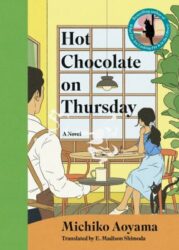
Across a bridge in a quiet neighborhood in Tokyo, a seasonal cherry blossom sits on the river. Nearby is the Marble Cafe, where a woman writes in a notebook and a young waiter prepares her favorite hot drink. Both wonder about each other and about the other lives of the clientele who frequent this charming little cafe behind the trees…
Without even realizing it, we may touch and change someone else’s life.
Taking a walk along the river, cooking the best tamagoyaki, ordering hot chocolate, forgetting to remove our nail polish… The small, everyday acts that we do can lead to unexpected encounters, reverberate far beyond our own circle, and ultimately make a difference in the world around us.
Hot Chocolate on Thursday is a tapestry of slice-of-life moments that each open and close with a woman ordering her regular hot chocolate at the mysterious Marble Cafe. What happens in between will touch and swell your heart, as we connect with a community of untold unfolding lives. – Hanover Square Press
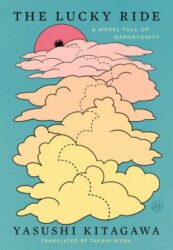
The Lucky Ride: A Novel Full of Opportunity by Yasushi Kitagawa, translated by Takami Nieda
Combining the whimsy and possibility of The Midnight Library with the mystery and revelatory power of The Secret, Come along for the ride of a lifetime in this heartwarming Japanese bestseller, a story about recognizing opportunities, embracing happiness, and discovering what true fulfillment looks like.
What if a single journey could change everything for you? What if it could lead you to new possibilities, help you reconnect with loved ones, or bring peace to your past?
In this charming story, the unluckiest man in Japan is given a chance to flip his fortunes when a mysterious driver appears, offering him the opportunity to seize a new path. Life’s setbacks can often feel overwhelming, but in The Lucky Ride, you’ll embark on a journey of self-growth that shows us that luck isn’t something you’re born with—it’s a result of the choices you make and the positive energy you bring into the world.
Set off on this heartwarming adventure and discover that luck isn’t a random gift—it’s something you build over time, a treasure that can be passed down through the generations. Yasushi Kitagawa’s uplifting and compassionate parable will inspire you to find joy in every moment, recognize the blessings in your life, and understand that by living each day with a good spirit, you’re crafting your own luck, one ride at a time. – HarperOne
Menu of Happiness by Hisashi Kashiwai, translated by Jesse Kirkwood (book 3 in Kamogawa Food Detectives series)
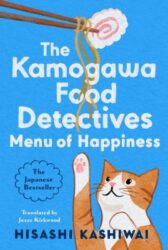
Every memory has a flavor. A very special restaurant in Kyoto helps find them . . .
Welcome to the Kamogawa Diner, where every meal is a mystery ready to be solved. This unique establishment is run by a father-daughter duo who offer more than just mouth-watering meals. They act as “food detectives,” delving into the past to produce nostalgia-infused dishes for their hungry clientele.
Among the patrons is a once-renowned pianist whose promising career was marred by a self-inflicted injury. She longs to taste the yakisoba shared with the only man she ever truly loved. The diner also welcomes a man haunted by shadows of regret. His mind is haunted by the memory of gyoza served by the parents of a lover he once jilted, as he seeks understanding and, perhaps, forgiveness.
The Kamogawa Diner doesn’t just serve food – it recreates forgotten recipes, helping its patrons to revisit memories lost to time. Each dish is a portal to the past, serving not just sustenance but solace and reconnection through the miracle of delicious food. – G.P. Putnam’s Sons

A Midnight Pastry Shop Called Hwawoldang by Lee Onhwa, translated by Slin Jung
Twenty-seven-year-old Yeon-hwa has inherited a neighborhood bakery from her grandmother. Curiously, her grandmother’s will spells out two conditions: Yeon-hwa must keep the shop going for at least another month and only open it to customers from 10 PM until midnight. Yeon-hwa is hesitant at first; her grandmother was always distant, raising Yeon-hwa after her parents died in a car accident. But she agrees to the terms, hoping that running the bakery will help her to finally understand her grandmother after all these years.
Yeon-hwa soon learns that the Hwawoldang—the name means “flower moon temple” —is not an ordinary dessert shop. The customers who arrive late at night are spirits, there to attend to unfinished business before being reincarnated. The sweets they crave hold some deep significance in their earthly lives, and they expect Yeon-hwa to meet their requests, as her grandmother did.
With each customer who arrives, Yeon-hwa learns which special desserts live in their memories and will help them on their way. Aided by the shop’s resident black cat, Yeon-hwa learns how to find closure for her customers—and begins to unravel her own family’s secrets as well. – William Morrow