
Native American Heritage Month is November, so let’s spend the month reading Indigenous tales. Below is a list of Indigenous books for children that we have gathered. As of this writing, all of these titles are owned by the Davenport Public Library. Descriptions are provided by the publishers.
Toddler Book
When sun rises by Aida Salazar ; [illustrations by] Caribay M. Benavides
Derived from Mexican Indigenous wisdom, this is the third title in a series of poetic board books centering around establishing an authentic, heartfelt connection with nature.
Using Mexican concepts, this poignantly lyrical series invites young children to pay witness to nature and the ways in which the outside world interacts with our own human rhythms. The Sun guides all life on Earth. We move to its cycles through the seasons—listening to the awakening of nature in spring, celebrating the shining warmth in summer, honoring our loved ones in autumn, and dreaming of better days ahead in winter. Its steadfastness touches and gives life to every being, showcasing the power of universal interconnectedness. Award-winning author Aida Salazar lovingly turns her attention to the youngest readers with her signature lyrical text—in English with a few Spanish words interwoven, perfectly paired with vibrant, mystical art crafted by Caribay M. Benavides. This book is a truly meaningful and formative experience for all young readers. – Rise x Penguin Workshop
Picture Books
Across the ice : how we saved the Ojibwe horse by Darcy Whitecrow and Heather M. O’Connor ; illustrated by Natasha Donovan
Discover the history of the endangered Ojibwe horse and the daring intervention of the Lac La Croix First Nation in this celebration of community, tradition, courage, and hope.
It’s a cold, snowy night at Lac La Croix First Nation, and two siblings are too excited to fall asleep. The horses are coming tonight! Amid the buzz of aunties and uncles and cousins, Nookomis tells a story that began many years ago, when their people shared the land with herds of wild ponies. In a symbiotic relationship, the people provided the horses with food and shelter, while the horses helped them run traplines and travel. But after many years had passed, and the herd had dwindled to four, the government threatened to shoot them. It was time to move the remaining horses to safety—but getting them there would be harder than they thought! Follow the true story of a “heist across the ice” from Ontario to Minnesota and learn how a small herd of hardy, indigenous horses returned years later to their native land. Rich illustrations honor the life of the Ojibwe people over time, as well as the land and living things that have survived under their stewardship. – Candlewick
Afloat written by Kirli Saunders ; illustrated by Freya Blackwood
Roam the water with me. We are here to learn.
Here to spin wisdom, to grow …
From award-winning Gunai author Kirli Saunders and seven-time CBCA-winner Freya Blackwood comes Afloat, a story told in a time of climate crisis. Against a backdrop of a changed environment, an Elder leads a child along the waterways, sharing her People’s knowledge and gathering community along the way.
Afloat is an uplifting and inspiring picture book that uses the practice of weaving as a powerful metaphor for the honouring and teaching of First Nations wisdom, and the coming together of all people to survive, thrive and create a more hopeful future. – Hardie Grant Children’s Publishing
The animals speak : the Lakota way = Wamákashkaŋ’iya: Lakhól Wichóh’aŋ Kiŋ by S. D. Nelson, translator Dakota Goodhouse
Award-winning Lakota author-artist S. D. Nelson shows what wisdom can be learned from animals in this universal, strikingly illustrated picture book about connecting with the natural world.
Lakota translation by Dakota Goodhouse
From our animal brothers and sisters, young readers can learn the Lakota Way, an ancient principle that transmits the virtues and values we should all strive to include in our own lives. If we watch and listen to their teachings, they will prepare us as we make our way through the joys and challenges of our mysterious, wondrous world.
Award-winning author and illustrator S. D. Nelson conveys the concept of the Lakota Way through energetic illustrations and a simple text that names each animal in both English and Lakota, helping children to embrace these Indigenous principles in their daily lives.
Mother Bear watches over her cubs, guiding us to walk with strength and protect those who need protecting.
Otter, the playful swimmer, reminds us that games and laughter are good for our hearts.
And as Tadpole transforms into Frog, he demonstrates we’ll make changes in our lives too. – Abrams Books for Young Readers
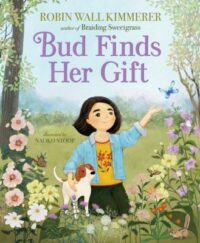
Bud finds her gift written by Robin Wall Kimmerer ; illustrated by Naoko Stoop
From the #1 New York Times bestselling author of Braiding Sweetgrass comes a beautiful and lushly illustrated tale celebrating gratitude, reciprocity, and finding our place in the natural world, ideal for sharing with the youngest readers.
When young Bud sees people bustling around, intent on their chores and their screens, she is certain they must be doing important things—and she wants to be included. But wise Nokomis, her grandmother, shows her that there is a different way to find belonging, one that relies on stillness and observing the natural world. As Bud discovers the freely given gifts of the Earth, she wonders if she has something important to give back: What is her gift?
Infused with warmth, humor, and insight, and beautifully illustrated by Naoko Stoop, the first picture book by renowned author and Indigenous ecologist Robin Wall Kimmerer inspires readers to treasure nature’s generosity and the gifts each one of us can share with the Earth. – Allida
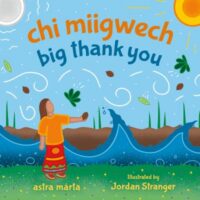
Chi miigwech = Big thank you by astra márta ; illustrated by Jordan Stranger
Chi miigwech means big thank you in Anishinaabemowin.
We can say chi miigwech for the natural world, the plants and animals and even the creatures we cannot see. Chi miigwech for our basic needs like food and shelter and for everything we feel and experience. Chi miigwech for the Seven Grandfathers Teachings: truth, love, honesty, courage, humility, wisdom and respect. And chi miigwech for you! – Orca Book Publishers
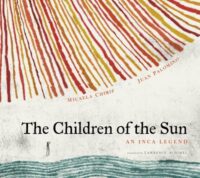
The children of the sun : an Inca legend written by Micaela Chirif, illustrated by Juan Palomino, translated by Lawrence Schimel
The birth of human civilization is recounted in this celebrated Incan legend, retold by Peruvian poet Micaela Chirif and award-winning illustrator Juan Palomino.
How was the world’s first city formed? How did people learn to plant crops, cook food, and weave fabric?
One day, back when the world was new and no one built houses, the Sun saw himself reflected in the waters of Lake Titicaca. He came closer to his own shining face, and a flame fell into the lake, giving birth to a young man and young woman. The Sun gave his son and daughter an important task: to found the very first city, a place where they could teach humans better ways of living. The children of the Sun set out to find the perfect spot, and the people of the earth followed them.
With rich language and striking art, poet Micaela Chirif (Peru) and New York Times/New York Public Library Best Illustrated Children’s Book winner Juan Palomino (Mexico) retell a story from the Incan empire that once ruled western South America. The Children of the Sun invites today’s children to hear an explanatory myth from a pre-Colombian culture—and ponder how it relates to other stories about cities and communities.
The Children of the Sun is translated from Spanish by award-winning translator Lawrence Schimel and is part of Eerdmans’ Stories from Latin America series. An engaging way to explore fables, myths, and legends as well as South American culture during Indigenous People’s Day and Hispanic Heritage Month. – Eerdmans Books for Young Readers
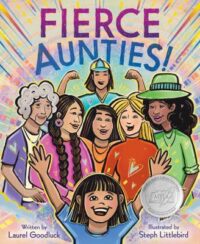
Fierce aunties! By Laurel Goodluck ; illustrated by Steph Littlebird
A joyful and vibrant celebration of what makes aunties so special, from Indigenous author and illustrator team Laurel Goodluck and Steph Littlebird inviting all kids to connect with the fierce aunties in their lives.
Who do you go to for advice and support? Or when you want an adventure and a little extra courage? Or when you need to find that warrior spirit inside you? Fierce aunties!
Aunties come in different shapes, sizes, and ages. They all have different laughs, skills, and stories. They might be your parents’ sisters, your older cousins, or even family friends. But there’s something they all have in common: They’re fierce, they love you, and they’ll help make everything better. – Simon & Schuster Books for Young Readers
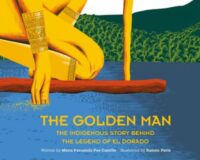
The golden man : the indigenous story behind the lengend of el Dorado written by Maria Fernanda Paz-Castillo ; illustrated by Ramón París
The Indigenous story that inspired the legend of El Dorado
Before El Dorado became a tale of European conquest and lost treasure, it was an Indigenous story—rooted in ritual, reverence, and gold.
The Golden Man introduces young readers to the true origin of this legendary myth. Set in the lush highlands of what is now Colombia, this beautifully illustrated picture book tells the story of the Muisca people and their sacred ceremony at Lake Guatavita. There, a young leader, dusted in gold from head to toe, dives into the waters as an offering to the gods and a symbol of his new role as ruler.
Through rich storytelling and detailed, historically grounded artwork, this book honors the Muisca civilization—the master goldsmiths whose spiritual traditions gave rise to one of the most enduring legends of the Americas.
Written by Colombian author María Fernanda Paz-Castillo, whose acclaimed books have reached readers across the Spanish-speaking world, and illustrated by award-winning Venezuelan artist Ramón París. – Crocodile Books
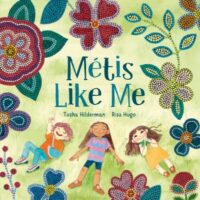
Métis like me written by Tasha Hilderman ; illustrated by Risa Hugo
Whether or not you’re Métis, there’s so much to experience and learn about this amazing Indigenous culture — take a picture book journey into Métis crafts, music and cooking with friends who love to share.
Are you Métis like me? A group of children of Métis descent share and explore all the ways they celebrate and experience their heritage — enjoying traditional foods like bannock bread and Saskatoon berries; crafting with beads; sharing stories, dance, music and songs. Each child shares a different way they enjoy honoring their backgrounds and weaving parts of the rich tapestry that makes up Métis culture. One child, though, has grown up disconnected from their history, and can’t join in with the others in the same way. But they soon see it’s never too late to learn, celebrate or become a part of a community in which Métis and non-Métis alike can discover the richness of an often-overlooked culture.
This rhythmic, jubilant book will encourage young readers of all backgrounds to celebrate their own heritage and learn more about Métis history, and contains back matter including an author’s note, recipe and dictionary to further inspire. – Tundra Books
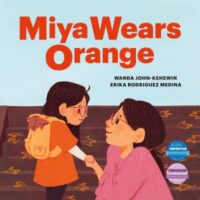
Miya wears orange by Wanda John-Kehewin ; [illustrations by] Erika Rodriguez Medina
Miya Wears Orange by author Wanda John-Kehewin (winner of the prestigious Sheila A. Egoff Children’s Literature Prize for Hopeless in Hope), is a beautifully illustrated children’s picture book that gently explores the complex feelings a young girl experiences as she learns the history of residential schools. Based on the lived experience of the author and her daughter, it serves as a vital tool for Social Emotional Learning (SEL), helping educators and parents foster emotional safety while introducing young minds to the history of Indigenous Peoples in Canada.
Miya loves her school, and she especially loves storytime. But one day, her teacher shares a painful history: a story about a little girl who was taken away to a residential school. The little girl wasn’t allowed to go home, her hair was cut, and she wasn’t allowed to keep her favourite doll. She was separated from her family simply because she was Indigenous—just like Miya!
Miya worries the same thing will happen to her today. Her mom comforts her, explaining that Indigenous boys and girls are no longer forced to leave their families. While Miya is relieved, the weight of this history leaves her sad and confused. How can a child safely navigate these big feelings?
Perfect for reading on the National Day for Truth and Reconciliation, this deeply moving and inclusive story models healthy coping strategies for children dealing with heavy historical truths. It answers a vital Call to Action for modern education, providing a bridge to discuss intergenerational trauma with empathy, care, and hope for a better future. – Highwater Press
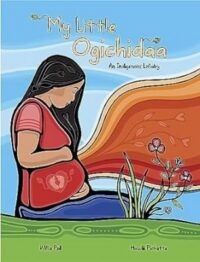
My little Ogichidaa : an indigenous lullaby by Willie Poll ; Hawlii Pichette
My Little Ogichidaa is inspired by Indigenous motherhood. It invites readers to explore the compelling dreams and hopes of an Indigenous parent for her soon-to-be-born warrior. This heartwarming and empowering story is a celebration of Indigenous love and the powerful legacy that it creates.
The word Ogichidaa itself means Warrior in Anishinaabemowin, and this beautifully illustrated book is a tribute to Indigenous families everywhere who are proudly raising their children to carry forward their culture, language, and love with resilience, strength, and kindness. – Medicine Wheel Publishing
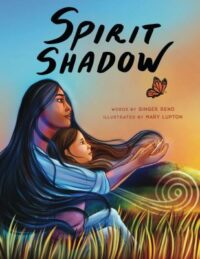
Spirit shadow with words by Ginger Reno ; illustrated by Mary Lupton
An Indigenous child discovers her heritage in this story about the power of our ancestors and the way they guide and shapes us, even when we don’t know it yet.
Willa has always had two shadows. One at her feet and another that’s been quietly beside her since the night of her birth. Always just out of reach.
Until Mom and Willa take a trip to Diligwa, a replica of an ancient Cherokee village. And it’s here among wattle and daub houses and brown hands crafting, Willa realizes that Spirit is her ancestors, beckoning her to claim her Cherokee heritage. For Willa to join a Nation over 400,000 strong.
Beautifully told, Spirit Shadow is a powerful tale about reclaiming culture and finding your way home. Lovingly illustrated by debut illustrator Mary Lupton, each spread is a feast for the eyes. Filled with nods to Cherokee beadwork and weaving as well as Cherokee syllabary, Willa’s story is suffused with love and tenderness. The book ends with a moving conclusion for children everywhere to embrace their own ancestors.
Back matter includes a note about Diligwa and the Cherokee Nation. – Holiday House
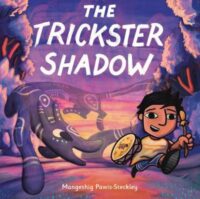
The trickster shadow by Mangeshig Pawis-Steckley
From an acclaimed Ojibwe artist comes a story that offers an empowering universal message about finding inner strength.
Zoon’s shadow is always in his way. It makes a mess of his room, disrupts his class at school, and trips him on the soccer field. Zoon doesn’t know what to do! Until he tells his grandmother about it, and she gives him his grandfather’s drum. Its rhythm is like a heartbeat. If only Zoon can listen to the drum’s song, and ultimately to his own heart, he may yet find a way to thrive alongside his shadow.
Pawis‑Steckley’s striking, graphic art brings to vibrant life both the challenges of controlling our trickster impulses and the luminosity of ancestral and inner wisdom, paving the way for us all to listen to our hearts. – Little, Brown Books for Young Readers
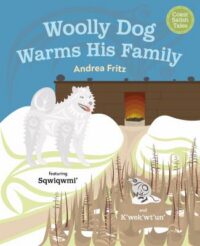
Woolly Dog Warms His Family by Andrea Fritz
Indigenous artist and storyteller Andrea Fritz tells the tale of a Salish woolly dog who goes on an adventure over land and sea to gather natural fibers to keep his human family warm.
Sqwiqwmi’ the young Salish woolly dog has a nice warm coat, and he wants to help protect his people from the cold and wet West Coast winters too. He sets out to pick the cozy fluff that grows on the nearby fireweed, but the plants are bare this time of year. Guided by a friendly shrew and a wise eagle, Sqwiqwmi’ journeys across the Salish Sea and into high mountains, collecting goat’s wool and nettle stalks—and even some of his own fur!—that his family will spin and weave into beautiful, warm blankets.
In this original story set in Coast Salish Traditional Territory, author and artist Andrea Fritz uses Indigenous storytelling techniques and art to share the culture and language of the Hul’q’umi’num’-speaking Peoples. – Orca Book Publishers
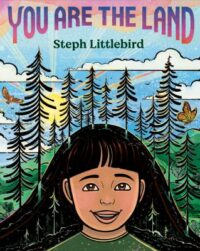
You are the land written and illustrated by Steph Littlebird
A joyful exploration of Indigenous culture following a child’s loving relationship with the land that supports and nurtures her as she grows
You Are the Land is a vivid ode to belonging within a family, within a community, and within the natural world.
From the day she’s born, a child feels the love and power that come with being part of something bigger. She’s a new spring leaf, alive and growing, as strong as the ancient cedars and as radiant as the glittering night sky. She is one with the amazing forces of nature that surround and nurture her, and that she nurtures in return.
Through inspiring words and sweeping illustrations, renowned author-artist Steph Littlebird’s stunning debut celebrates our connection to the land and shows how we perfectly mirror its beauty and resilience. – Nancy Paulsen Books
Juvenile Nonfiction
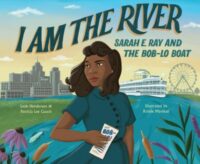
I am the river : Sarah E. Ray and the Bob-Lo boat / Leah Henderson & Patricia Lee Gauch ; illustrated by Kristle Marshall
I am the river. Blue and green, fast and flowing,
sweeping river grasses aside . . .
moving between Lake Erie and Detroit.
The Detroit River has long had a story to tell. It has seen a time before people. And it has seen many faces cross its waters, from Indigenous people guiding canoes to settlers on its banks and freedom seekers riding the underground railroad north toward liberty, with Bob-Lo Island at the river’s end, so close to Canada. At one time, a giant steamboat carried hundreds of excited children and adults to the amusement park that was built on Bob-Lo.
But Sarah E. Ray discovered in 1945 that not all people were invited on this boat, to this island, once a symbol of the journey to freedom. It depended, she discovered, on the color of your skin.
This is the dramatic story of how one young woman’s courage could create a dramatic turning point that would stand out proudly, and forevermore, in the history of a river older than the country called America. – Levine Querido
Leave a Reply